Adamax is a synthetic peptide developed by researchers at the Russian Academy of Sciences and the Institute of Molecular Genetics. This compound is an improved version of the well-known N-Acetyl Semax Base, a neuropeptide Semax derivative. It was designed to cross the blood brain barrier more effectively and resist enzymatic degradation, allowing it to reach target areas in the central nervous system more efficiently.
While it’s a promising nootropic peptide, its cognitive and physical benefits are still strictly for research purposes, and understanding both its potential benefits and possible side effects is essential for anyone studying its effects in a controlled laboratory setting.
How This Peptide Works
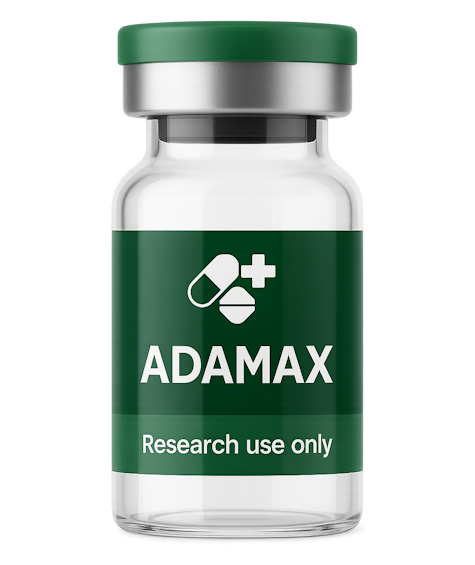
Adamax’s mechanism of action is based on molecular genetics research focused on enhancing cognitive function, promote neurogenesis, and protecting brain health. It incorporates a unique adamantane group, also referred to as the adamantyl portion, which increases stability and prevents early breakdown, ensuring the peptide remains active for an extended period.
The peptide primarily acts by binding to TrkB receptors, which are critical for stimulating brain derived neurotrophic factor (BDNF). BDNF plays a key role in synaptic plasticity, learning, and memory formation. Its interactions with TrkB are well documented. For example, the role of BDNF in neuronal survival and cognitive performance has been reviewed in NCBI’s comprehensive report on neurotrophic factors.
Increased BDNF activity supports brain tissue regeneration, strengthens neural pathways, and helps rescue dendritic structures. It may also counteract dendritic and synaptic deficits associated with age related cognitive decline and certain neurodegenerative disorders like Alzheimer’s disease. Studies highlight how BDNF impacts memory and learning through neuroplasticity, making it a central target in cognitive enhancement research.
5 Potential Benefits
Preliminary research suggests several possible cognitive and physical benefits of this peptide, though these findings are based on early lab work and test subjects, not widespread human clinical trials.
- Improved cognitive performance and enhanced memory through stimulation of BDNF and increased brain function
- Greater emotional stability and reduced anxiety by regulating neurotransmitter activity
- Potential physical benefits, including higher energy levels and better coordination between the brain and body
- Increased motivation, possibly linked to better mental performance and overall cognitive abilities
- Preventing neurodegeneration by protecting nerve cells and promoting boosting neurogenesis
Research into brain function and nootropic peptides like Adamax and Semax derivatives has shown significant promise. In one review, the effects of neurotrophic factors on learning and recovery were examined, confirming their importance in long-term brain health.
Known and Potential Side Effects
Since this peptide is still in early research phases, definitive safety data is limited. However, parallels can be drawn from similar nootropic peptides and general peptide research.
1. Injection Site Irritation
Because Adamax is typically delivered through a subcutaneous injection, there is a possibility of local reactions such as redness, mild swelling, or discomfort, which could indirectly indicate dendritic and synaptic deficits. In peptide research, similar issues have been observed in trials involving injectable compounds. Peptide vaccine studies have reported minor site-related effects like irritation and swelling.
2. Cognitive Disturbances
Some individuals may experience temporary cognitive impairment if BDNF pathways are overstimulated. This can manifest as mild confusion, difficulty concentrating, or even irritability. These side effects are usually temporary and subside once dosing is adjusted.
3. Mood and Neurotransmitter Changes
Because this peptide affects neurotransmitter activity, mood changes such as heightened alertness or reduced anxiety can occur, raising concerns about the safety barrier. Overstimulation may lead to jitteriness or restlessness in sensitive individuals.
4. Systemic Immune Responses
Peptide-based therapies can occasionally provoke systemic immune reactions. A review on peptide therapeutics highlighted the challenges of off-target effects and the importance of careful design to minimize immune responses.
5. Long-Term Risks
One of the greatest unknowns with this peptide is its long-term safety and potential neuroprotective properties. Continuous exposure could, in theory, influence tau pathologies or other neurological markers related to neurodegeneration. While there is no direct evidence of this, research into related pathways suggests caution.
Why the Adamantane Group Matters
The structural modification that makes Adamax unique is its adamantane group. This group allows it to:
- Cross the blood brain barrier efficiently
- Resist temperature induced break down
- Maintain integrity by preventing enzymatic degradation
- Target precise areas of the central nervous system
By protecting the active peptide chain, the adamantyl portion helps ensure more reliable results during experiments and minimizes variability caused by instability. A review on drug delivery systems and peptide stability explains this importance.
Dosage and Lower Dose Considerations
Because research is ongoing, starting with a lower dose of Adamax is advised to reduce side effects while still observing its effects on cognitive abilities and mental performance. Experimental data suggest that lower doses may offer measurable results without overstimulating neural pathways.
Most experiments utilize subcutaneous injection as the preferred method. This direct delivery helps bypass the digestive system and ensures that the peptide remains intact when reaching target areas.
Related Article – Adamax Dosage Guide For Men & Women
Handling and Storage
Proper storage is vital for this peptide. Like many peptides, it is vulnerable to temperature induced break down if not maintained correctly. For research labs, this means:
- Keeping it refrigerated at recommended temperatures
- Avoiding repeated freeze-thaw cycles
- Storing in sterile, sealed vials away from light and moisture
Failure to follow these steps may lead to partial breakdown, affecting both the reliability and safety of experiments.
The Role of N-Acetyl Semax Base
This peptide is built on decades of research into Semax derivatives, including its implications for metabolic processes. By modifying the structure of N-Acetyl Semax Base, researchers created two new nootropic peptides, including Adamax. These innovations allow for improved delivery, stability, and potential neuroprotective effects.
Research into Semax has shown its impact on cognitive enhancing effects, with studies detailing its mechanisms through interactions with BDNF and related pathways. It extends these benefits further by introducing structural improvements.
Future Research Directions
The Russian Academy and other research institutions continue to explore this peptides potential. Areas of active investigation include:
- Rescuing cognitive impairment in test subjects
- Repairing synaptic deficits and improving brain tissue regeneration
- Understanding it’s role in preventing neurodegeneration
- Mapping its effects on cognitive abilities, memory, and mental performance
As research progresses, scientists hope to determine whether Adamax can one day be used to address age related cognitive decline and conditions like Alzheimer’s disease.
Frequently Asked Questions
What are the negative side effects of peptide therapy?
Peptide therapy is generally considered safe when carefully dosed and supervised, but like any form of treatment, it can have negative side effects, especially if dosing is too high or peptides are improperly stored. Most side effects are mild and temporary, but researchers and clinicians have documented several possible risks.
- Injection site reactions – Redness, swelling, or irritation can occur at the point of subcutaneous injection. These are common with injectable peptides and typically resolve quickly.
- Hormonal imbalances – Certain peptides, such as those affecting growth hormone or testosterone, can disrupt natural hormone cycles, leading to fatigue, mood changes, or weight fluctuations.
- Allergic reactions – Although rare, some individuals may experience allergic responses to the peptide or preservatives used in its preparation.
- Digestive issues – Peptides taken orally or absorbed systemically can occasionally cause nausea, bloating, or discomfort.
- Neurological effects – Some nootropic peptides may influence neurotransmitter balance, causing anxiety, irritability, or mild overstimulation.
Research on peptide therapy highlights these risks and the need for monitoring. A review on peptide-based therapeutics emphasizes the importance of dosing and stability, noting that improperly stored or degraded peptides can cause unpredictable responses.
What is it used for?
Adamax peptide is a synthetic peptide designed as an improved version of N-Acetyl Semax Base, which is known for its cognitive enhancing effects. Developed by the Russian Academy of Sciences and the Institute of Molecular Genetics, it was created to cross the blood brain barrier more efficiently and provide longer-lasting effects through its unique adamantane group.
This peptide is strictly for research purposes and is not approved for clinical use. Scientists are currently studying it for its potential to:
- Enhance cognitive function, learning, and memory through stimulation of brain derived neurotrophic factor (BDNF) and TrkB receptors.
- Promote brain tissue regeneration and boosting neurogenesis, which may help rescue dendritic structures and reverse synaptic deficits caused by injury or aging.
- Explore possible applications in neurodegenerative disorders such as Alzheimer’s disease, where BDNF activity is often reduced.
- Investigate its ability to prevent neurodegeneration and support long-term brain health.
Research on BDNF shows its critical role in cognitive processes, and its therapeutic potential has been reviewed extensively. While Adamax is promising, it remains an experimental research compound.
Do nootropics have any side effects?
Yes, nootropic peptides and other brain-enhancing compounds can have side effects, especially if misused or taken at high doses. While they are often praised for their positive effects such as improved memory, focus, and emotional stability, it’s important to consider possible risks.
- Headaches or cognitive disturbances – Overstimulation of neural pathways can sometimes cause temporary cognitive impairment, mild confusion, or mental fatigue.
- Mood changes – Since many nootropics affect neurotransmitter activity, individuals may experience anxiety, irritability, or mood swings.
- Sleep disruption – Certain cognitive enhancers may interfere with natural sleep cycles.
- Systemic side effects – Some peptides can influence broader biological processes like immune response or metabolism, leading to unexpected results.
- Long-term unknowns – The extended effects of many nootropics are still being studied. Research is ongoing to determine their safety over years of use.
A scientific review on nootropic mechanisms highlights the need for caution, especially with compounds still under study. Individual responses vary, and what improves focus in one person could cause overstimulation in another.
What peptide is best for the brain?
Several peptides are under study for their ability to improve brain function, protect nerve cells, and prevent neurodegenerative disorders. The “best” peptide depends on the specific research goal, but some of the most promising include:
- Adamax – Designed to enhance synaptic plasticity and brain tissue regeneration, it’s considered a cutting-edge nootropic peptide with a focus on repairing damage and preventing neuronal death.
- N-Acetyl Semax Base – The precursor to Adamax, studied for decades and known to improve mental performance and cognitive abilities. Research has documented its mechanisms through BDNF signaling.
- Cerebrolysin – A peptide mixture used in some countries to treat neurological conditions, with evidence supporting its role in rescuing cognitive impairment after brain injury or stroke.
- Selank and other Semax derivatives – Studied for their potential in reducing anxiety, improving emotional stability, and enhancing cognitive function.
- DSIP (Delta Sleep-Inducing Peptide) – Known for supporting deep sleep cycles and aiding recovery, indirectly benefiting overall brain health.
Among these, Adamax stands out because its unique adamantane group allows it to cross the blood brain barrier more effectively than many other peptides, targeting the central nervous system with precision. This makes it one of the most promising nootropic peptides currently being studied, though its safety and full potential remain under investigation.
Conclusion
This peptide represents a significant step forward in the design of nootropic peptides, aiming to enhance cognitive health. Its unique adamantane group gives it stability and the ability to cross the blood brain barrier, making it one of the most promising nootropic peptides studied today.
While initial findings suggest numerous positive effects — including enhanced memory, improved brain health, and boosting neurogenesis as supported by anecdotal effect statements — the full range of side effects remains unclear. Until comprehensive studies are completed, Adamax peptide should be handled strictly as a research compound and never used outside controlled laboratory settings.
Through continued exploration, scientists aim to uncover how it can contribute to our understanding of the brain and the future of neuroprotective research. With careful dosing, proper handling, and adherence to safety protocols, this peptide may one day play a crucial role in preventing neurodegeneration and promoting long-term cognitive health.