Adamax is a synthetic peptide and one of the most advanced semax derivatives developed through decades of scientific innovation at the Russian Academy of Sciences and the Institute of Molecular Genetics. These institutions have long been at the forefront of exploring ways to protect brain health, enhance cognitive abilities, and slow age related cognitive decline through cutting-edge neuroscience research. It was designed as an improved version of N-Acetyl Semax Base, a compound with a proven history of cognitive enhancing properties and neuroprotective properties.
This peptide has rapidly gained attention as a promising nootropic peptide due to its unique molecular structure, high lipid solubility, and resistance to enzymatic degradation, all of which make it a more stable intermediate peptide compared to earlier compounds.
It was engineered with a specialized adamantane group that helps it cross the blood brain barrier efficiently, reaching brain tissues and the central nervous system to deliver its benefits directly where they are needed most. Researchers continue to explore it for its proposed nootropic benefits, especially its ability to promote neurogenesis, repair synaptic deficits, and improve overall cognitive function, particularly through the involvement of brain derived neurotrophic factor.
The Science Behind Adamax
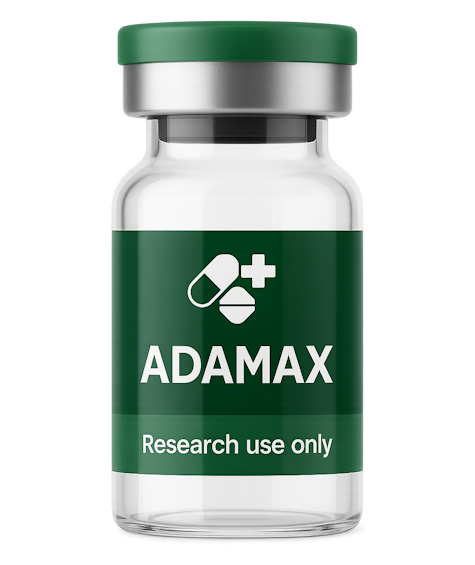
Adamax belongs to a family of nootropic peptides designed to support cognitive enhancement, memory, and resilience against neurological stress, with insights from molecular genetics informing its development. Like its predecessor peptide Semax, it interacts with neurotrophic factors such as brain derived neurotrophic factor (BDNF). These factors play a critical role in maintaining synaptic plasticity, fostering enhanced memory, and preventing neuronal death.
When derived neurotrophic factor BDNF binds to TrkB receptors, it activates signaling pathways essential for brain tissue regeneration, the growth of nerve cells, and the repair of dendritic and synaptic deficits.
This process has been extensively studied in both human and animal models, with research showing that BDNF is essential for cognitive performance, cognitive enhancement, and recovery from neurodegenerative disorders, including insights from genome wide transcriptional analysis. A recent study on BDNF and neural repair highlights its importance for maintaining long-term cognitive health and repairing brain tissues after injury.
This peptide was specifically engineered to deliver a massive boost in efficiency compared to older semax derivatives, and this modification makes it distinct in enabling deeper penetration into the nervous system and more reliable activation of receptor genes associated with cognitive improvement.
Modification Makes This Peptide Unique
The modification makes this peptide distinct from traditional Semax formulations. Scientists added a specialized adamantane group to the N-Acetyl Semax Base sequence, along with an acetyl group improving its lipid solubility and ability to cross the blood brain barrier. This design also prevents enzymatic degradation, creating a stable intermediate peptide that remains active longer within the body.
This structure makes Adamax a more stable intermediate peptide, providing a foundation for the development of two new nootropic peptides giving researchers more consistent data when working with test subjects in laboratory settings. It also ensures that it can target precise brain tissues and metabolic processes, delivering results that help explain how this peptide works at a cellular level. A genome-wide transcriptional analysis of genes related to neuroplasticity has provided valuable insights into how compounds like Adamax influence neural repair and cognitive enhancing properties.
Neurotrophic Factors For This Peptide
Adamax’s ability to enhance derived neurotrophic factor BDNF activity is one of its most significant strengths. BDNF and other neurotrophic factors regulate the growth and survival of neurons, contributing to boosting neurogenesis and preventing neuronal death. Increased BDNF activity helps combat the effects of age related cognitive decline, highlighting various benefits where reduced levels of these growth factors are commonly observed.
Animal studies, including those involving rat brain focal ischemia and cerebral ischemia models, have demonstrated how Adamax and similar compounds can reduce damage, support brain tissue regeneration, and repair dendritic and synaptic deficits. These findings are promising for future applications in conditions such as Alzheimer’s disease, where impaired BDNF signaling plays a key role. A detailed review on BDNF signaling confirms the central role of these pathways in protecting against neurodegenerative disorders.
Cognitive and Physical Benefits
The cognitive and physical benefits of this peptide are broad, encompassing both mental and systemic functions. Through its targeted action on the nervous system and vascular systems, Adamax provides support for cognitive function and overall brain health :
- Enhancing cognitive abilities like focus, memory, and learning
- Protecting brain tissues and preserving brain function
- Supporting optimal cognition and cognitive performance in stressful conditions
- Improving emotional stability and potentially reduced anxiety
- Encouraging the repair of synaptic plasticity pathways affected by cognitive impairment
- Assisting the immune and vascular systems in maintaining overall brain health
These positive effects are especially significant for individuals experiencing cognitive impairment from aging, neurological injury, or disease progression, especially since it’s an improved version of previous peptides. To learn more about the potential side effects of Adamax, consider reading our in-depth article here.
Regular and Sustained Usage
In controlled laboratory studies, regular and sustained exposure has shown potential for long-term cognitive enhancing effects. Research involving test subjects demonstrates that a sustained approach may:
- Strengthen nerve cells and improve their communication pathways
- Enhance resilience against tau pathologies, which are hallmarks of Alzheimer’s disease
- Improve the survival of new neurons and promote repair in regions affected by neurodegenerative disorders
- Encourage consistent improvements in cognitive function over time
These results highlight why Adamax is a promising nootropic peptide for exploring long-term neuroprotection and rescuing cognitive impairment in research contexts.
Optimal Adamax Dosage
Determining the optimal dosage for this peptide is critical to achieving consistent research outcomes. Because it’s highly stable and potent, even small amounts can have a significant impact on cognitive abilities and brain health. Dosage is carefully calibrated depending on experimental design and the goals of each study.
In research environments, this peptide is often delivered via subcutaneous injection, which allows for precise control over the amount and ensures direct delivery into the bloodstream without loss due to digestion. This method helps preserve the peptide’s unique molecular structure and enhances its ability to cross the blood brain barrier efficiently.
Scientists must explore dosage ranges carefully, adjusting protocols to prevent overstimulation while observing the proposed nootropic benefits and cognitive enhancing effects it provides.
For a more in-depth discussion on the dosage guidelines for Adamax, check out our complete guide here.
Cognitive Enhancement and Emotional Stability
One of the most promising aspects of this peptide is its influence on cognitive enhancement. By targeting TrkB receptors and enhancing BDNF activity, it helps repair and reinforce neural circuits involved in cognitive function. This action has been shown to improve cognitive performance, enhanced memory, and attention span in test subjects.
Additionally, Adamax supports emotional stability, potentially helping to balance mood and stress responses. This is particularly valuable for cognitive and physical benefits in populations vulnerable to stress-induced cognitive impairment.
Studies on neuropeptide Semax and related compounds have documented their neuroprotective effects, demonstrating how peptides in this class contribute to resilience and recovery in the brain.
Neuroprotective Properties and Brain Repair
Adamax’s neuroprotective properties make it valuable for studying conditions like Alzheimer’s disease, stroke, and other forms of neurological decline, as it is a neuropeptide developed with these applications in mind. In models of cerebral ischemia, this peptide has been shown to reduce damage, support brain tissue regeneration, and repair synaptic deficits caused by oxygen deprivation.
By promoting the growth of new neurons and protecting existing ones, it helps safeguard against the progressive loss of brain function. These results align with findings from other nootropic peptides, confirming that targeted peptide-based interventions can have a meaningful impact on brain health and longevity.
The way this peptide works has been the subject of intense study. In the lab, researchers monitor how it interacts with TrkB receptors, growth factors, and receptor genes to stimulate boosting neurogenesis and repair processes, similar to how peptide semax affects these interactions.
One study involving genome wide transcriptional analysis revealed how this peptide, derived from the n acetyl semax base, impacts genes related to memory, learning, and neural recovery. This supports its classification as a promising nootropic peptide for future therapeutic development.
Because Adamax is an improved version of earlier semax derivatives, it offers more precise and reliable results due to its lipid solubility, making it a preferred choice for laboratories investigating neurotrophic factors and cognitive enhancing properties.
Future Discoveries and Research
As scientists continue to explore this peptide, they are uncovering a wide array of proposed nootropic benefits that extend beyond cognitive improvement. These include:
- Better regulation of metabolic processes affecting the brain
- Enhanced survival of nerve cells under stress
- Protection against the accumulation of tau pathologies
- Support for vascular systems in maintaining healthy circulation within the brain
- Strengthening of brain tissues and communication networks between neurons
Such findings point to it’s potential to redefine how researchers approach the study of neurodegenerative disorders and cognitive enhancement strategies.
Frequently Asked Questions
What is it used for?
Adamax is a synthetic peptide and advanced semax derivative created by scientists at the Russian Academy of Sciences and the Institute of Molecular Genetics. It was designed as an improved version of the original N-Acetyl Semax Base, optimized to cross the blood brain barrier more efficiently and resist enzymatic degradation thanks to its specialized adamantane group.
It’s used strictly for research purposes to study its potential impact on cognitive function, cognitive abilities, and brain health. Researchers are particularly interested in how it can:
- Stimulate brain derived neurotrophic factor (BDNF) and TrkB receptors, which play a central role in neural growth and repair
- Promote neurogenesis by supporting the growth of new neurons and repairing brain tissues damaged by aging or injury
- Protect against neurodegenerative disorders like Alzheimer’s disease by slowing or preventing neuronal death
- Support recovery in laboratory models of cerebral ischemia and cognitive impairment
- Provide insights into age related cognitive decline and how to rescue cognitive impairment
It has quickly become a promising nootropic peptide in modern neuroscience because of its stability, precision targeting, and ability to support cognitive enhancement at the cellular level.
What peptide is best for the brain?
Several nootropic peptides have been studied for their ability to improve brain function, enhance cognitive performance, and support long-term cognitive health. The “best” peptide depends on the specific research goal, but a few stand out based on current evidence:
- Adamax – Known for its ability to promote neurogenesis, protect nerve cells, and enhance derived neurotrophic factor BDNF signaling. Because of its more stable intermediate peptide design and ability to cross the blood brain barrier, it provides highly targeted support for cognitive abilities and brain health.
- Semax – A well-established peptide that improves BDNF activity and enhances cognitive function, memory, and focus. To learn more about how Adamax compares to Semax, check out our detailed comparison here.
- Selank – Often paired with Semax for its effects on emotional stability and reducing anxiety, helping create a more balanced brain state.
- Cerebrolysin – A combination of peptides and amino acids used in some countries to support recovery after stroke or traumatic brain injury.
- DSIP (Delta Sleep-Inducing Peptide) – Studied for its role in sleep regulation and supporting natural brain repair processes.
Among these, Adamax is considered a next-generation nootropic peptide because of its optimal cognition potential and its ability to deliver consistent results with smaller doses, making it a strong candidate for research into complex neurodegenerative diseases.
What is the function of Semax peptide?
The Semax peptide is one of the most well-researched nootropic peptides and has been used for decades in Russia and Eastern Europe. Its primary function is to enhance cognitive performance and protect the nervous system by increasing the activity of derived neurotrophic factor BDNF, which is vital for brain function, memory, and learning.
Semax works by:
- Stimulating TrkB receptors, which are directly involved in BDNF signaling and neural growth
- Supporting synaptic plasticity and repair of damaged pathways in the brain
- Improving attention span, focus, and cognitive abilities under stress or fatigue
- Providing a neuroprotective effect to help safeguard neurons from oxidative stress and other damage
- Assisting recovery from cerebral ischemia, stroke, and other neurological injuries
Studies have shown that peptide Semax affects BDNF signaling, leading to improved outcomes in animal models and early human trials. This makes Semax a cornerstone in research on cognitive enhancement and neural repair.
What are the benefits of peptide supplements?
Peptide supplements are gaining popularity for their potential to support cognitive health, physical benefits, and overall metabolic processes. While many peptides are still in the research phase and not approved for clinical use, studies have shown several positive effects that suggest their value in health and wellness applications.
Key benefits include:
- Cognitive enhancement – Certain peptides like Adamax and Semax can improve cognitive performance by boosting BDNF and promoting neurogenesis, leading to enhanced memory and learning capacity.
- Neuroprotection – Some peptides protect against neuronal death and slow the progression of neurodegenerative disorders such as Alzheimer’s disease and Parkinson’s.
- Emotional stability – Compounds like Selank may help with reducing anxiety and stress regulation.
- Physical benefits – Peptides can assist with tissue recovery, muscle repair, and maintaining a healthy immune and vascular systems balance.
- Repairing brain tissues – Certain peptides support brain tissue regeneration after injury or ischemic events, such as stroke.
A review of BDNF and neurotrophic factors highlights how peptides influence neural growth and repair. However, it’s important to note that most peptide supplements should still be considered research compounds and not used as a replacement for approved medical treatments until further studies confirm their safety and effectiveness.
Conclusion
In conclusion, this promising nootropic peptide represents a significant step forward in the science of cognitive enhancement and brain repair. With its adamantane group, stable intermediate peptide design, and ability to cross the blood brain barrier, it delivers targeted action to the nervous system and brain tissues with remarkable precision.
The cognitive and physical benefits of Adamax, ranging from improved cognitive function and emotional stability to protection against neurodegenerative disorders, demonstrate why it has become a focus of global neuroscience research. Through regular and sustained administration in controlled laboratory settings, researchers are gaining deeper insights into the mechanisms of cognitive enhancement and neural protection.
While this peptide remains strictly for research purposes and is not approved as a dietary supplement, its role in advancing our understanding of brain health and optimal cognition cannot be overstated. As ongoing studies continue to refine optimal dosage and explore its effects, this peptide stands as a model for the next generation of nootropic peptide innovation.
Ultimately, it has the potential to transform how scientists approach rescuing cognitive impairment, repairing synaptic plasticity, and preventing the devastating effects of Alzheimer’s disease and other neurological conditions.
To learn more about Adamax peptide, including its origin, mechanism of action, structure and components, and more, check out our detailed guide here.