
Adamax is a synthetic peptide and one of the most promising nootropic peptides in modern neuroscience research. It was developed as an improved version of N-Acetyl Semax Base, building on decades of work exploring semax derivatives and their cognitive enhancing properties. This neuropeptide developed by leading scientists aims to cross the blood brain barrier more effectively, thanks to its unique adamantane group, and is designed for precision targeting of brain tissues while providing stability through its specialized adamantyl portion.
It’s currently being investigated for its potential cognitive and physical benefits in enhancing cognitive abilities, promoting brain tissue regeneration, and supporting cognitive health in those at risk of age related cognitive decline. Early studies with test subjects suggest that regular and sustained administration may improve brain function, protect nerve cells, and reduce markers associated with neurodegenerative disorders like Alzheimer’s disease. However, it remains purely for research purposes and is not intended for human consumption or to buy this peptide outside of a controlled laboratory setting.
How This Peptide Works
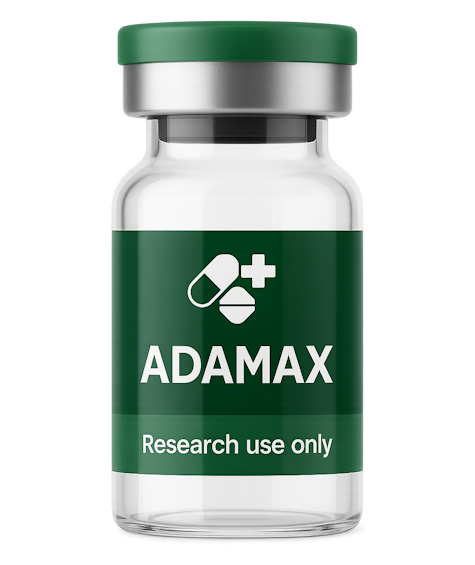
Adamax’s unique structure is key to how it functions. The peptide includes an adamantane group at its N terminus and a stabilizing design at its C terminus. This modification makes it more resistant to degradation and increases its lipid solubility, enabling it to cross the safety barrier of the nervous system and reach target areas within the brain.
Once in the brain, this peptide interacts with TrkB receptors, activating pathways linked to brain derived neurotrophic factor (BDNF). BDNF plays a central role in maintaining cognitive performance, decision making, and improved learning. When BDNF binds to TrkB, it supports new neurons and enhances connections between existing ones, improving overall brain health and resilience. This relationship has been studied extensively and reviewed in neuroscience literature.
This peptides design also allows it to promote cognitive enhancement by influencing neurotrophic factors. These factors regulate the growth, survival, and repair of brain cells. Studies have shown that proper BDNF signaling can lead to enhanced memory and learning, making compounds like Adamax important for understanding the mechanisms behind cognitive enhancing effects.
Optimal Dosage and Considerations
Determining the optimal dosage for Adamax depends on the individual’s response, weight, and research objectives. Dosages should always be adjusted depending on how test subjects react in initial experiments. Research suggests that starting at the lower end of the range and slowly increasing can help limit potential risks while still observing meaningful positive effects like reduced anxiety, increased motivation, and higher energy levels.
Because it’s a neuropeptide developed for research, its dosage is calculated carefully to ensure reliable results. The table below provides a general dosage framework based on weight ranges for men and women. This information is intended for controlled laboratory studies only.
| Weight Range (lbs) | Male Dosage (mcg) | Female Dosage (mcg) |
|---|---|---|
| 100 – 130 | 200 – 300 | 150 – 250 |
| 131 – 150 | 250 – 350 | 175 – 275 |
| 151 – 170 | 300 – 400 | 200 – 300 |
| 171 – 190 | 350 – 450 | 225 – 325 |
| 191 – 210 | 400 – 500 | 250 – 350 |
| 211 – 230 | 450 – 550 | 275 – 375 |
| 231 – 250 | 500 – 600 | 300 – 400 |
These ranges are not intended for medical use. Optimal dosage may vary significantly based on molecular structure, stability, and how it improves various brain pathways. Some research also suggests that a sustained approach, with consistent dosing over time, may deliver more reliable outcomes in experiments related to cognitive enhancing effects and metabolic processes that influence brain health.
Key Research Behind This Peptide
This peptide stems from the study of N-Acetyl Semax and its derivatives. Early work on two new nootropic peptides led to the development of Adamax, which incorporates both an adamantyl portion and precise molecular genetics engineering to create a stable compound with superior brain-targeting ability.
The neuropeptide Semax family has been shown to affect neurotransmitter activity, promote cognitive enhancement, and support brain function under stress. A study on BDNF and TrkB signaling highlights how these pathways contribute to cognitive abilities and protection against tau pathologies, which are commonly seen in neurodegenerative diseases.
When researchers explore this peptide, they are looking for ways to improve how BDNF plays a role in supporting nerve cells and preventing cognitive impairment associated with aging or injury. This is especially relevant in age related cognitive decline, where reduced BDNF activity correlates with loss of cognitive abilities and deterioration of brain tissues.
Related Article – Adamax vs Semax: A Side-By-Side Comparison
Dosage and Individual Variation
One critical aspect of setting the optimal dosage is considering each individual’s response to Adamax. While some test subjects may show significant improvements in cognitive abilities, others may have more modest changes. Adjustments must be made gradually to observe both the proposed benefits and potential risks, including overstimulation or unexpected neurotransmitter activity changes.
In laboratory conditions, researchers have observed that this peptide improves not just cognitive function but also certain physical benefits, such as better coordination between the nervous system and metabolic processes. These results align with other findings on nootropic peptides and their ability to promote brain tissue regeneration and cognitive enhancing effects.
Studies also note that a sustained approach may encourage the growth of new neurons and repair damaged neural pathways, leading to long-term improvements in cognitive health. This mirrors findings from other BDNF-related studies showing how derived neurotrophic factor BDNF signaling impacts long-term brain plasticity and recovery after injury.
6 Potential Benefits
Research teams continue to explore this peptide for its wide range of potential effects. While much remains to be confirmed, early findings suggest the following proposed benefits of regular dosing in controlled environments:
- Support for cognitive function and cognitive enhancement
- Improved cognitive performance through stronger neural connections
- Protection of nerve cells and prevention of tau pathologies
- Growth of new neurons and enhanced brain tissue regeneration
- Positive effects like better mood, reduced anxiety, and higher energy levels
- Enhanced brain health in models of age related cognitive decline
These outcomes are connected to how neurotrophic factors like BDNF interact with TrkB receptors. Current findings have been documented in multiple neuroscience reviews, which explain how strengthening these pathways may slow the progression of degenerative conditions and boost resilience in the nervous system.
Read our comprehensive guide on the benefits of Adamax here.
Conclusion
In conclusion, Adamax represents an exciting advancement in nootropic peptides research. Its unique structure, featuring the adamantane group and adamantyl portion, allows it to cross the blood brain barrier and reach target areas of the brain where it can influence BDNF and other neurotrophic factors.
The proper dosage is essential for achieving consistent and measurable results. By following optimal dosage guidelines and carefully monitoring individual’s response, researchers can study its cognitive enhancing properties and effects.
While it remains a research-only compound, it continues gaining attention for its potential to improve learning, memory, and overall cognitive health. As studies progress, scientists hope to uncover how this peptide and related compounds like N-Acetyl Semax can shape the future of neurological science and provide new insights into protecting and enhancing the human brain.
Related Article – Adamax Peptide Side Effects: Understanding the Risks and Mechanisms